
Contents
- 1 Why Automation Is the Future of Manufacturing
- 2 The Complete Workflow Automation Suite
- 3 Inventory & Supply Chain Workflows
- 4 Maintenance, Quality & Safety Workflows
- 5 Production & KPI Workflows
- 6 Why Automating These Workflows Matters
- 7 Case Study: Mid-Sized Electronics Factory
- 8 How to Deploy the Suite Quickly
- 9 Transform Your Factory Today
- 10 Conclusion
Why Automation Is the Future of Manufacturing
Manufacturing today is under relentless pressure. Rising costs, fragile supply chains, unpredictable machine downtime, and sustainability requirements are pushing factories to their limits. Manual processes—whether in maintenance, reporting, or inventory planning—create bottlenecks and costly delays.
Forward-looking manufacturers understand that the solution isn’t just more manpower. It’s about creating a smarter, connected factory. That’s where workflow automation comes in.
By automating repetitive processes, centralizing data, and triggering real-time alerts, factories can run leaner, safer, and more profitably. This article introduces the Manufacturing Workflow Automation Suite—a set of 10 pre-built workflows powered by n8n that deliver end-to-end automation across inventory, production, quality, safety, and supply chain.
The Complete Workflow Automation Suite
The solution combines 10 ready-to-use workflows, each addressing a critical area of factory operations. Together, they form an end-to-end digital nervous system for manufacturing:
- Inventory & Supply Chain
- Maintenance, Quality & Safety
- Production & KPIs
All workflows connect seamlessly with existing systems (ERP, MES, IoT, Slack, Email, SMS) and log to a centralized database (PostgreSQL or Google Sheets) for analytics and compliance.
Inventory & Supply Chain Workflows
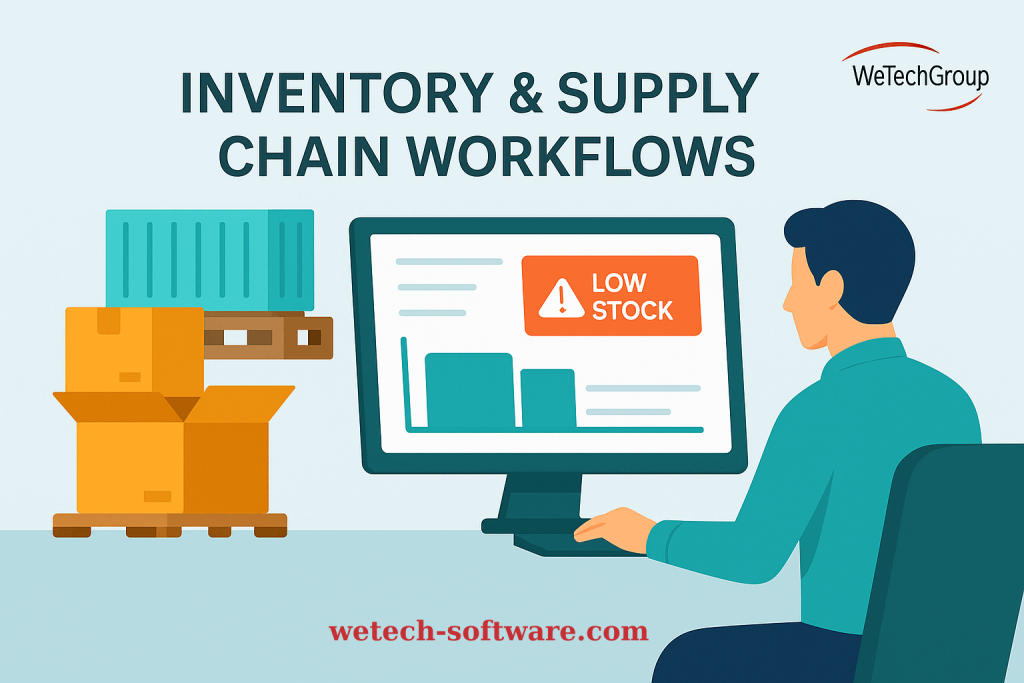
1. Inventory Restock Forecast
Problem: Stockouts disrupt production, while excess stock ties up working capital.
Solution: This workflow forecasts restock needs using sales and production data, sending alerts before safety stock is breached.
Benefit: Reduce stockouts, optimize inventory carrying costs.
2. Supply Chain Delay Monitor
Problem: Supplier delays ripple through production schedules.
Solution: Monitors purchase orders and expected delivery dates; triggers alerts when delays exceed threshold.
Benefit: Proactive rescheduling, improved supplier management.
3. Packaging Waste Calculator
Problem: Excess packaging waste inflates costs and harms ESG scores.
Solution: Tracks material usage vs. actual packaging needs; calculates waste percentage.
Benefit: Lower costs, better sustainability reporting.
Alt text: packaging waste trend chart for ESG reporting.
Maintenance, Quality & Safety Workflows
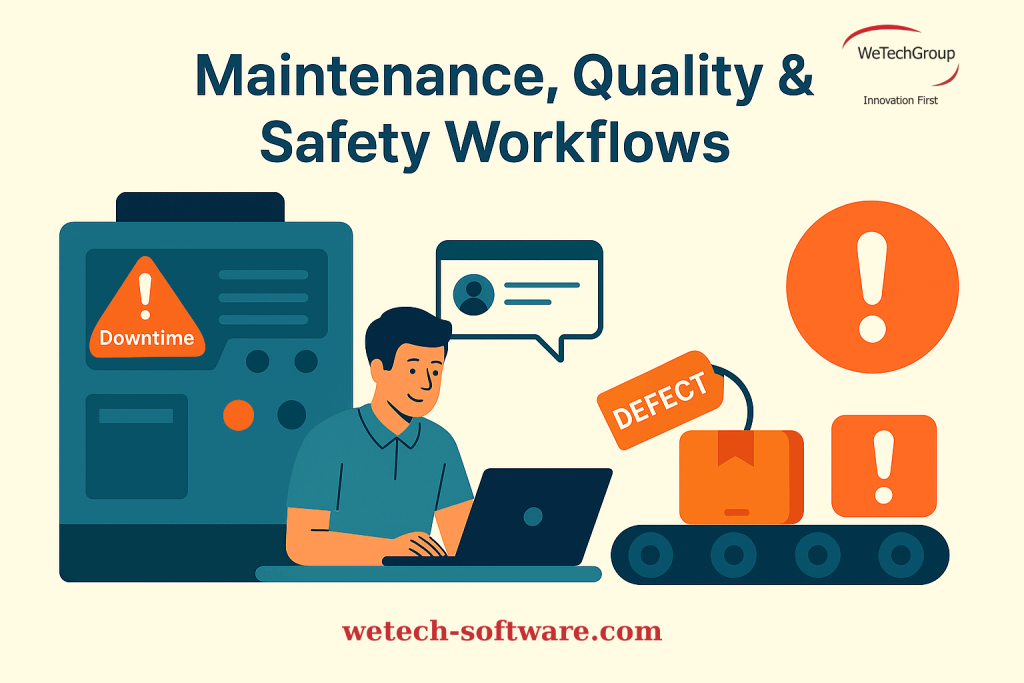
4. Machine Downtime Predictor
Problem: Unexpected machine downtime is one of the biggest profit killers.
Solution: Analyzes sensor and log data to predict likely downtime events.
Benefit: Enables predictive maintenance, cutting downtime costs by up to 30%.
Alt text: machine dashboard predicting downtime risk.
5. Maintenance Ticket Router
Problem: Misrouted maintenance requests slow response times.
Solution: Automatically assigns tickets to the right engineer/team based on machine and severity.
Benefit: Faster repairs, less production loss.
Alt text: maintenance ticket routed to technician via workflow.
6. Quality Defect Classifier
Problem: Manual defect inspection is slow and error-prone.
Solution: Uses AI/automation to classify product defects from QC data or images.
Benefit: Speeds up QA, reduces scrap and rework.
Alt text: defect classification dashboard with product images.
7. Safety Incident Alert
Problem: Delayed response to accidents endangers workers and risks compliance.
Solution: Instantly alerts safety officers via Slack, SMS, or email when an incident is reported.
Benefit: Faster emergency response, safer workplace.
Alt text: Slack notification of safety incident alert.
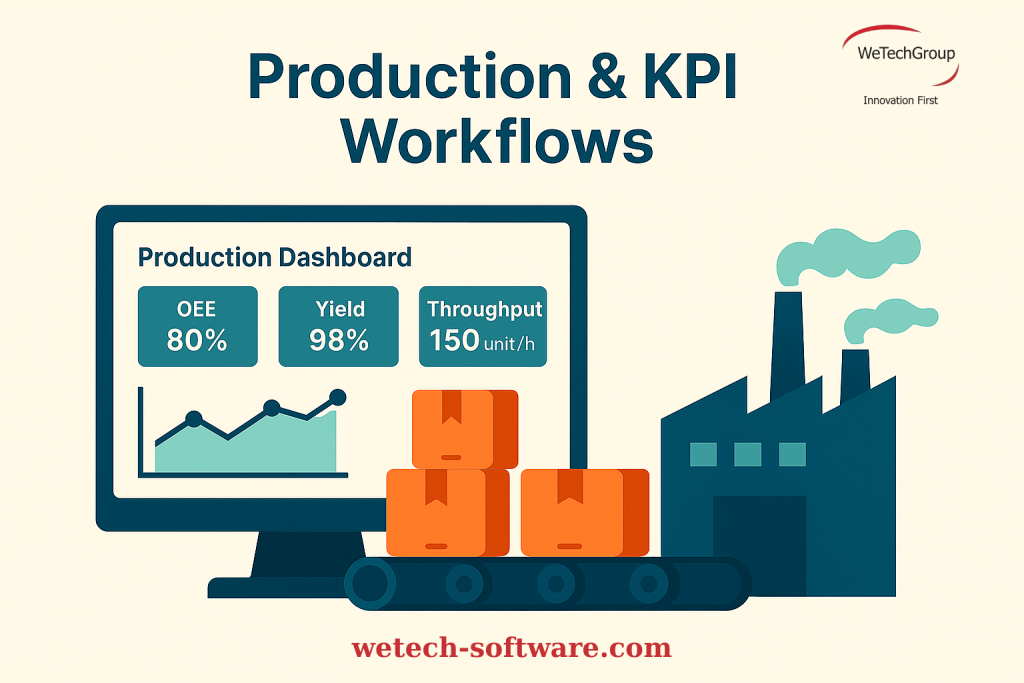
Production & KPI Workflows
8. MES Log Analyzer
Problem: MES logs are rich in data but too complex to analyze manually.
Solution: Parses and analyzes logs to detect anomalies in real time.
Benefit: Early detection of production issues.
Alt text: MES log analyzer dashboard highlighting anomalies.
9. Production KPI Dashboard
Problem: Lack of real-time KPI visibility leads to reactive decisions.
Solution: Aggregates OEE, yield, throughput into a live dashboard.
Benefit: Data-driven decisions, improved transparency.
Alt text: production KPI dashboard with OEE and yield metrics.
10. Shift Handover Summary
Problem: Manual shift reports cause data loss and miscommunication.
Solution: Automatically compiles shift output, rejects, and notes into a standardized report.
Benefit: Smooth handovers, consistent records.
Alt text: shift handover summary report displayed on screen.
Why Automating These Workflows Matters
Implementing these workflows doesn’t just solve isolated pain points. It creates a holistic automation ecosystem for manufacturers:
- Revenue Impact: Less downtime, more throughput, fewer missed orders.
- Operational Efficiency: Reduced manual admin and fewer errors.
- Customer Trust: Higher product quality and on-time delivery.
- Data Transparency: Centralized logs for audits, ESG, and continuous improvement.
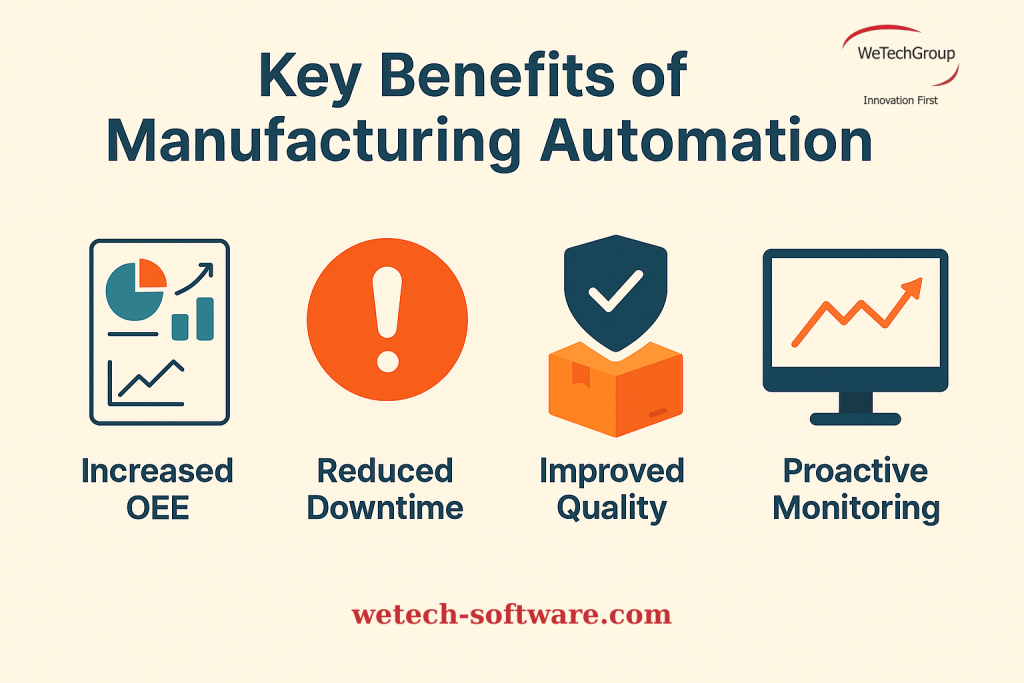
📊 Example KPI improvements from deployment:
- Downtime reduced by 25%
- Inventory overstock reduced by 18%
- OEE (Overall Equipment Effectiveness) improved by 12%
- Packaging waste reduced by 10%
Case Study: Mid-Sized Electronics Factory
A mid-sized electronics manufacturer in Vietnam deployed 6 workflows from the suite:
- Inventory Restock Forecast
- Machine Downtime Predictor
- Maintenance Ticket Router
- Quality Defect Classifier
- Production KPI Dashboard
- Shift Handover Summary
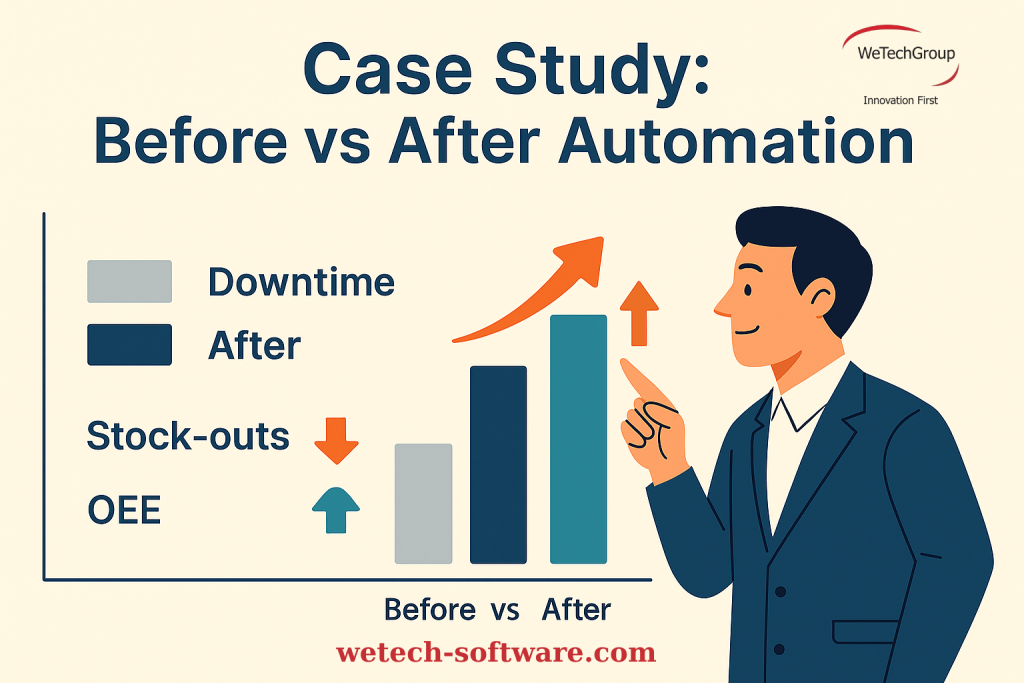
Results within 30 days:
- Recovered 21% of potential downtime losses.
- Reduced stockouts by 40%.
- Improved repeat orders and customer satisfaction by 15%.
This case demonstrates that even small-to-medium factories can achieve enterprise-level efficiency with workflow automation.
How to Deploy the Suite Quickly
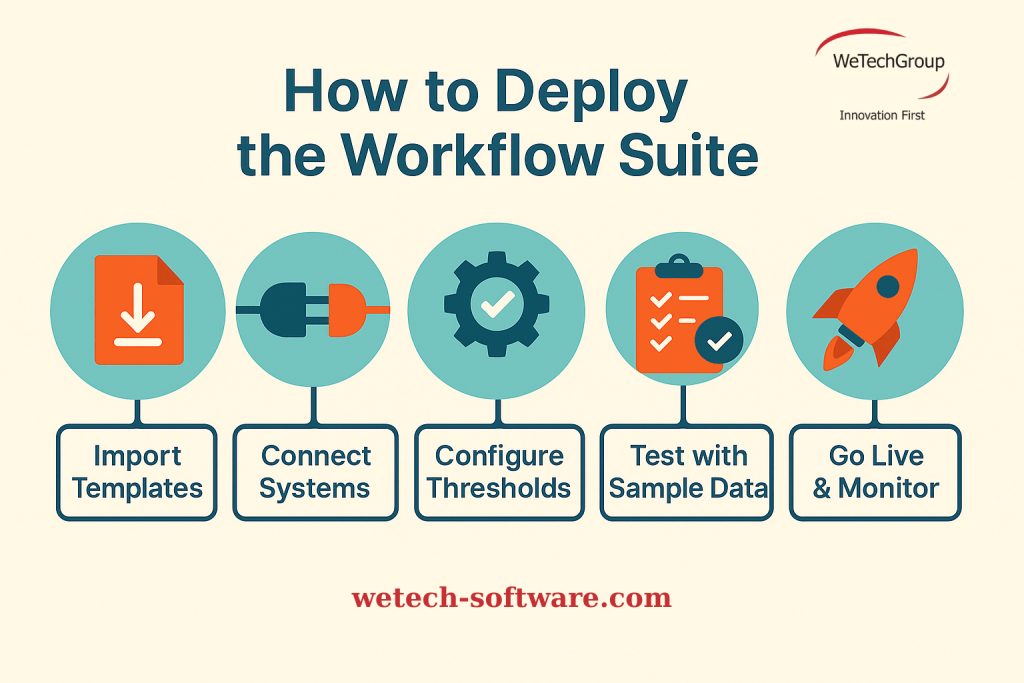
- Import templates directly from GitHub.
- Connect systems: ERP, MES, Slack, Email, SMS, IoT sensors.
- Set up logging in PostgreSQL (preferred) or Google Sheets.
- Configure thresholds (inventory, downtime risk, defect criticality).
- Test with sample data, validate alerts and dashboards.
- Go live and monitor KPIs via dashboards.
Deployment typically takes 2–3 weeks for a pilot project.
Transform Your Factory Today

Are downtime, waste, and supply chain delays eating into your margins?
👉 Contact us for a free consultation and see how the Manufacturing Workflow Automation Suite can revolutionize your operations.
We’ll help you deploy the right workflows, integrate with your existing systems, and unlock new levels of productivity.
Conclusion
Workflow automation is no longer optional—it’s a competitive necessity for global manufacturers. By adopting workflows for inventory, maintenance, quality, safety, and production KPIs, factories can:
- Reduce costs
- Boost efficiency
- Enhance worker safety
- Improve sustainability metrics
- Delight customers with consistent quality and delivery
The future of manufacturing is smart, connected, and automated. The question is: will your factory lead—or lag?


